UX/UI Design Services
Design that moves metrics
We combine visual design with conversion optimization, accessibility, and user research. Every decision is tested with real users and refined against the metrics that matter. From wireframes to production-ready prototypes, design treated as engineering, not decoration.
Capabilities
What We Offer
- User research & persona development
- Wireframing & prototyping
- Visual design & brand alignment
- Responsive & adaptive design
- Usability testing & iteration
- Design system creation
Tech Stack
Technologies
Why Notix
Design treated as engineering
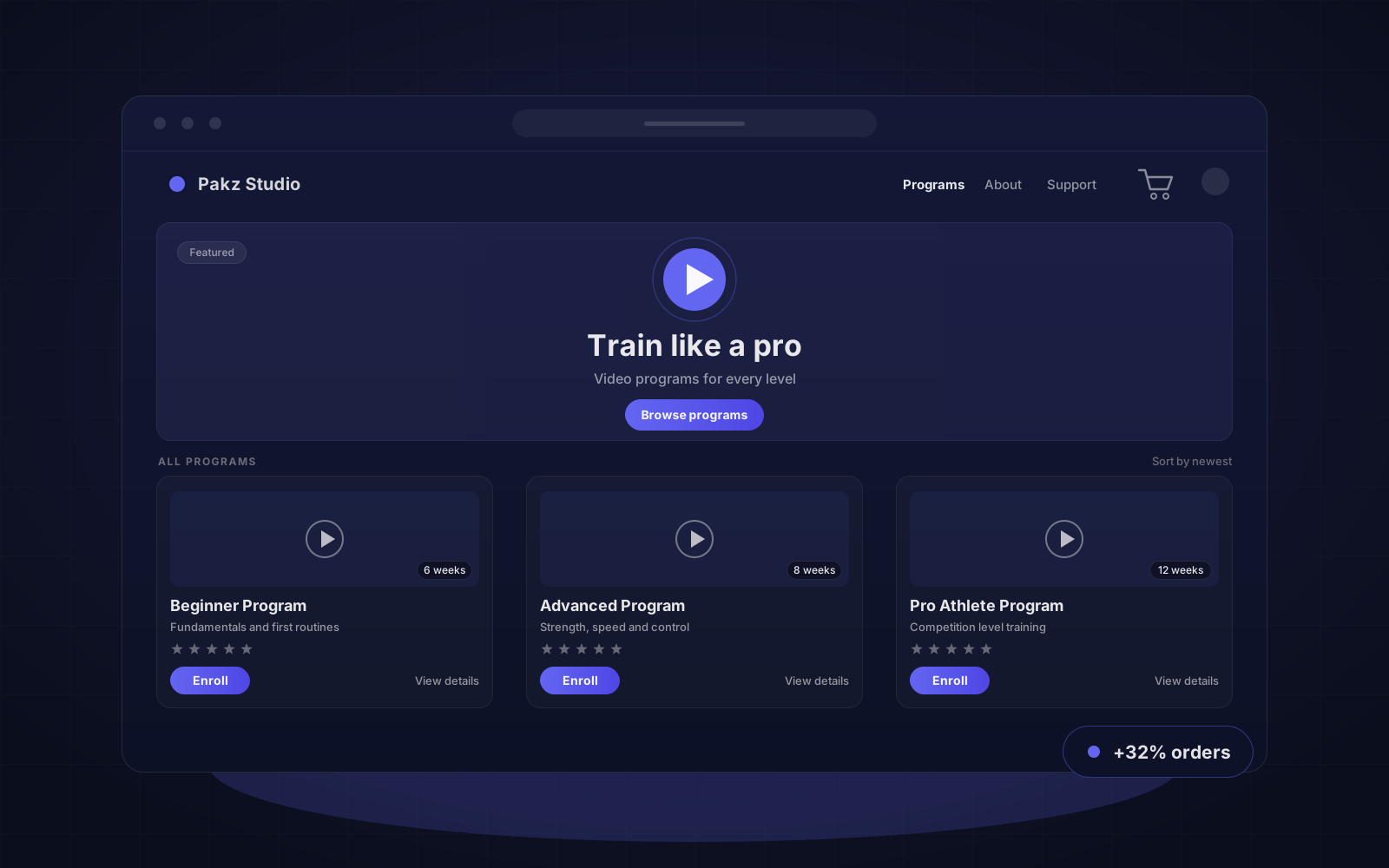
We treat design as engineering, not decoration. Every interface is tied to a metric it should move, and the results show up in the numbers: for one client, conversion-focused UX lifted engagement 38% and orders 32%. The same craft shaped Arhivix, the product we build and run ourselves for 500+ companies, and MaxPlayer, which we took from seed to launch for its owner.
Good design starts with evidence, not opinion. We run research, build personas, and test with real users, so decisions are grounded in behavior rather than taste. Then we translate findings into interfaces that are clear, fast, and usable.
Accessibility is part of the craft from the start, not a compliance audit at the end. We design to WCAG standards so your product works for every user, which also happens to be good for conversion and for search.
Design is never finished at handoff. We instrument the interfaces we ship, watch how real users actually behave, and feed that evidence into the next iteration, so the product keeps improving against the metrics that matter rather than settling for a strong first impression. That loop of research, design, test, and refine is how a good interface becomes a measurably better one, and it is the same discipline we applied to the products we build and run, used by 1M+ people in total.
What we build
Design work we take on
We take on product and app redesigns, conversion optimization for stores and funnels, design systems that keep a growing product consistent, user research and usability testing, and accessibility work that widens your audience.
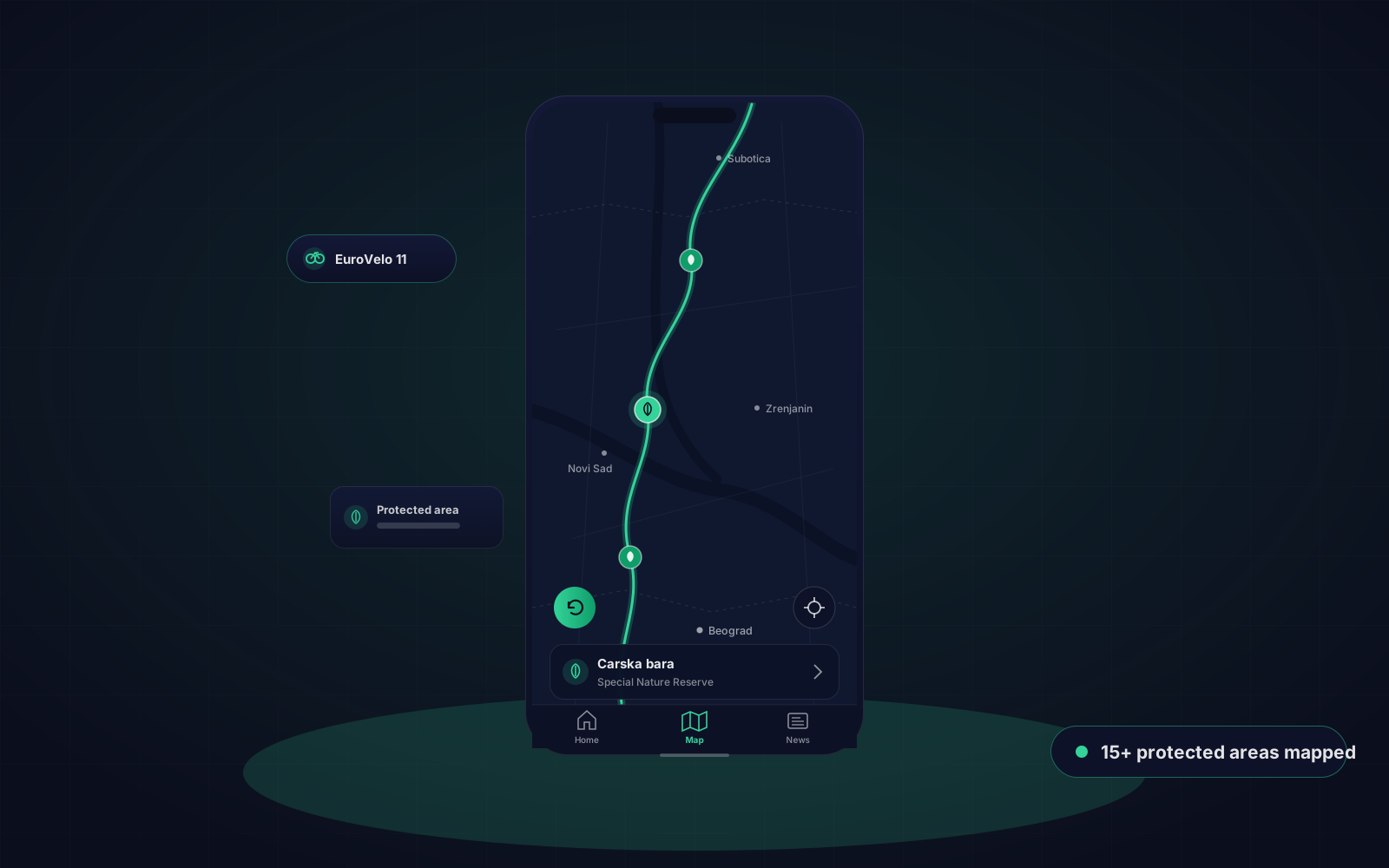
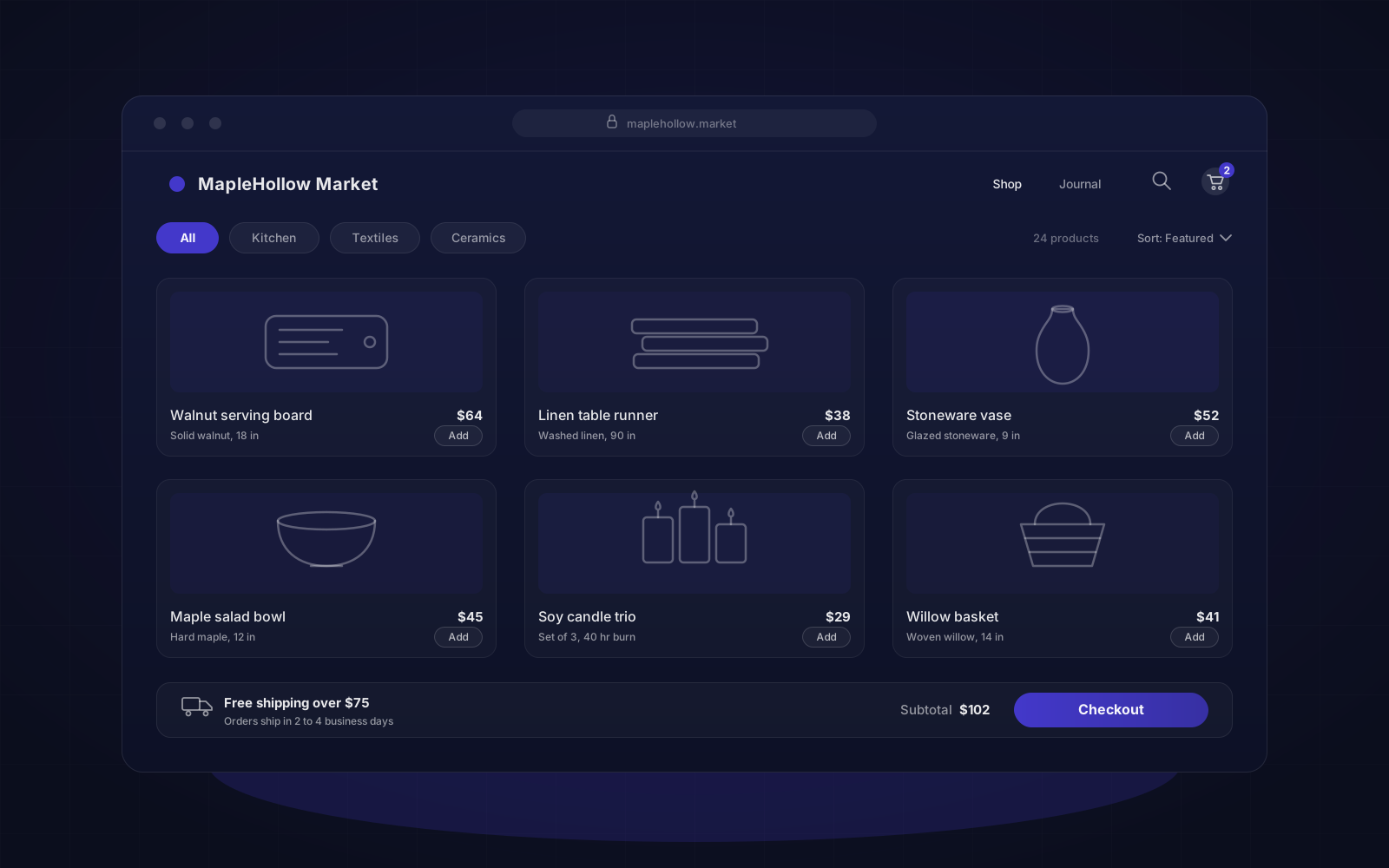
Client engagements include conversion-focused UX for a video-training store, translating an artisan brand into a warm storefront, and a public-sector tourism app praised for its creativity and vision. Whatever the brief, we start from the metric each screen should move and design toward it, then validate with real users before a line of code is written. Accessible, WCAG-aligned design is built in throughout.
How we work
Discovery to delivery, in artifacts
Every design engagement runs through four phases, and each one ends in something you can test or build from.
Discovery
We research your users, build personas, and pin down the metric each screen is meant to move.
Artifact: A research summary and clear success metrics.
Design
We move from wireframes to high-fidelity UI aligned with your brand, prototyping the key flows.
Artifact: A clickable prototype, delivered in about 48 hours for focused scopes, and a design system.
Handoff
We hand engineers specs, tokens, and components they can build from directly, with nothing left to guess.
Artifact: A developer-ready Figma library with redlines.
Delivery
We test with real users and iterate against live metrics, so the design keeps earning its keep after launch.
Artifact: A tested design system and a prioritized improvement backlog.
Engagement models
Ways to work with us
Every build is scoped to pay for itself, and you get a firm number after discovery rather than a vague estimate up front. Projects start at $25,000, and where you land from there depends on scope, integrations, and complexity. We publish real ranges by project type, from MVPs to enterprise platforms, in our software development cost breakdown. Three models cover almost every engagement, and we recommend the one that fits your stage and your budget.
Fixed-price MVP
Best for a validated scope you want in market fast
One price, one timeline, one working product. It suits a clear, bounded scope where you want a launchable MVP in about 6 weeks with no budget surprises. You approve the scope up front, we absorb the estimation risk, and you get production software at the end, not a throwaway prototype.
Time and materials
Best for products that will evolve as you learn
You fund a senior pod by the sprint and reprioritize the backlog every week as you learn from real users. It fits products where the scope will genuinely change, and you value the flexibility to steer over a fixed line item. You see working software every week and only pay for the work you direct.
Dedicated team
Best for a long roadmap and continuous delivery
An embedded senior team that works as an extension of yours, with the same standups, tools, and rituals as your own staff. It fits a long roadmap where you want continuity and deep product knowledge, scaling up or down as priorities shift, without the overhead of hiring in-house.
Proof
Outcomes we have shipped
A sample of what design that moves metrics looks like.
How we work
What you actually get
We design in Figma and the Adobe Creative Suite, prototype real interactions rather than static mockups, and validate them with user testing before anything reaches development.
You do not get a folder of pretty pictures. You get a design system: tokens, components, and redlines that engineers can build from directly, so the product that ships matches the product we designed. When we build it too, that handoff disappears and moves faster.
Because we tie design to metrics, we measure what we ship. A well-designed interface is also a fast-loading one, so our design and performance work reinforce each other.
Our Work
Related Projects
Client Feedback
What Our Clients Say
“Their workflow was extremely well structured, time was never wasted, and each phase moved forward efficiently.”
“What we found most impressive was their exceptional creativity and vision. They demonstrated a deep emotional understanding of our goals.”
“They understood the personality of an artisan brand and translated it into a beautiful digital experience.”
FAQ
Common Questions
Do you offer design-only services?
Yes. We provide standalone UX/UI design including research, wireframes, prototypes, and final designs. We often deliver the strongest results when we handle both design and development, but that is your call.
How do you ensure the design meets user needs?
Our process is user-centered. We start with research and personas, create wireframes for feedback, prototype key interactions, and iterate based on usability testing before anything is finalized.
Can you redesign an existing application?
Yes. We frequently redesign existing applications to improve usability, modernize the look, and lift conversion. We audit the current experience first, then propose targeted improvements.
Do you deliver a design system we can build from?
Yes. You get a developer-ready design system in Figma with tokens, components, and redlines, so the product that ships matches the design and engineers are never left guessing.
Is accessibility part of your design work?
Yes. We design to WCAG standards from the start, so your product is usable for everyone. Accessible design also tends to improve conversion and search visibility.
How do you measure whether a design succeeds?
We tie each screen to a metric before we design it, then test against it. On one e-commerce project that discipline delivered a 38% lift in engagement and a 32% lift in orders.
How much does UX/UI design cost?
Design engagements start at $25,000 and scale with scope, from a focused prototype to a full product design system. Our cost breakdown article shares realistic ranges.
Learn More
Related Reading
Ready to Get Started?
Book a free 30-minute consultation about your ux/ui design project. We reply within 24 hours with an honest read on scope, timeline, and budget.