Logistics and supply chain
Logistics Software Development
Logistics software fails in specific places: an ENS that rejects at the border, a control tower fed by fifteen-minute batch updates, telematics volume that outruns the database behind it. We are a senior team that ships its own products, Arhivix now runs document workflows for 500+ companies, and we publish our research on ICS2, fleet systems, and supply chain architecture before we ever quote a build. We have not shipped a TMS for a freight client yet, and you will hear that on the first call rather than after the contract.
The problem
Where logistics teams get stuck.
ENS data fails on fields nobody owns
Since 1 June 2026 every consignment entering the EU by any transport mode needs a valid ENS, filed either directly to ICS2 or inside a combined transit declaration through NCTS Phase 6 (European Commission). The carrier carries the obligation, but when the carrier does not hold a required particular, the importer, consignee, or freight forwarder has to file it.
One declaration therefore becomes a merge across several companies with different systems and different data quality. Platforms that cannot reconcile partial datasets before submission push the failure downstream, where it stops being a validation error and starts being dwell time.
Visibility only as fresh as the slowest integration
Procurement runs one system, the warehouse another, transportation a third, demand planning a fourth. None of them share state in real time, so a delayed shipment reaches the planner hours late and a stockout is discovered after it has already cost the sale.
A control tower that promises live status while being fed fifteen-minute batch extracts is not a visibility platform, it is a slower report. We wrote up the integration architecture that separates the two: event ingestion, a common event format across ERP, WMS, TMS, and carrier feeds, and exception alerts that fire on the event rather than on the next sync.
Telematics volume outgrows the database under it
Five hundred vehicles reporting once every ten seconds generate more than four million events per day. Dropped into a relational table with a timestamp column, that stack degrades within months: dashboards slow down, history gets truncated to keep queries alive, and the analytics nobody can run become the reason the project is judged a failure.
The fix is architectural rather than cosmetic. Edge filtering so only anomalies and aggregates travel, stream ingestion, time-series storage, and explicit retention tiers for live operations, daily aggregates, and long-term trends. Our fleet guide walks through the pipeline.
The manual layer nobody budgets for
Freight quoting by email. Invoice audit in a spreadsheet. HS codes retyped from a customer feed into a filing screen. Proof of delivery chased by phone the morning after. Each of these is a handoff, and every handoff is a place where data quality dies quietly.
The cost never appears as a line item, it appears as coordinator hours, re-submissions, disputed invoices, and a customer service team answering questions a tracking page should have answered. Automation pays back here first, before any optimization model is trained.
What we build
How we solve it.
Compliance
The rules that shape the build.
ICS2 and the pre-arrival ENS gate
ICS2 is the hard gate on EU inbound freight. As of 1 June 2026 all consignments arriving by any transport mode need a valid ENS, submitted directly to ICS2 or through a combined transit declaration in NCTS Phase 6. The Commission is explicit about what weak data produces: rejected declarations, risk mitigating referrals asking for more information, processing delays on arrival, and administrative sanctions for non-compliance with data requirements (European Commission, ICS2).
Filing responsibility is split by design. The carrier lodges the ENS, and where the carrier does not hold a legally required particular, the party that does hold it files that part (ICS2 FAQ). Reference uniqueness matters too: a duplicate LRN is rejected outright.
The build follows from that. A validation gate before submission, a canonical record that is not shaped like any single national gateway, an adapter per gateway that can be swapped without touching the record, and an error translation table per member state, because the XML schema is harmonized while the human-readable reject explanation is not.
EU Customs Reform: Data Hub, Trust and Check, low-value parcels
The reform replaces declaration-by-declaration filing with a single EU Customs Data Hub, backed by a new EU Customs Authority. The Hub opens for e-commerce in 2028, becomes voluntary for other importers in 2031, and is mandatory from 2034. Alongside it comes Trust and Check trader status, where fully transparent traders can release goods without active customs intervention and clear all imports through their home member state (European Commission).
The e-commerce half already bites. The EUR 150 duty relief is gone: from 1 July 2026 until 1 July 2028 a temporary flat fee of EUR 3 per item applies to goods in distance-sale consignments valued up to EUR 150, declared and paid by the declarant, with product identifiers becoming mandatory in November 2026 (Commission guidance).
No Data Hub API is stable enough to build against yet. What is worth doing in the meantime is keeping customs data in a canonical internal model with the gateway as a replaceable adapter, and treating parcel-level volume as a capacity requirement rather than a future problem. That is the difference between a migration measured in weeks and one measured in quarters.
Tachograph 2, driving time, and the US ELD rule
From 1 July 2026, light commercial vehicles above 2.5 tonnes registered in the EU and used in international transport must carry a second-version smart tachograph, and for the first time fall under the EU driving and rest time rules in Regulation (EC) No 561/2006. The retrofit phase for heavy-duty vehicles in international transport closed on 18 August 2025 (European Commission, Mobility and Transport). A segment of your fleet that was previously outside duty-time software is now inside it.
In the United States the equivalent is the FMCSA ELD rule: commercial motor vehicles in interstate commerce whose drivers keep records of duty status must use a device certified and registered with FMCSA, able to transfer records either by web services and email or locally by USB 2.0 and Bluetooth (FMCSA).
For the platform this means duty status is a first-class object, not a monthly report. It also means location and duty records are attached to a named person, so the data model needs a clean separation between operational tracking and driver identity, with retention rules agreed before the first works council conversation rather than after it.
EUDR and the traceability record
The EU Deforestation Regulation applies to large and medium operators from 30 December 2026 and to micro and small operators from 30 June 2027. Any operator or trader placing the covered commodities on the EU market, or exporting from it, must be able to prove the products do not originate from recently deforested land, and the information system set out in Article 33 of the regulation has been live since 4 December 2024 (European Commission).
For a 3PL or a shipper this is a data problem before it is a compliance problem. The evidence sits with suppliers, the obligation lands at the border, and the record has to be reproducible on demand months later, by someone who was not there when the shipment moved.
The canonical shipment record that keeps customs filings clean is the same record that answers a due diligence question. That is why we build traceability into the supply chain data model instead of bolting on a separate compliance module that drifts out of sync within a year.
Proof
Products we have shipped.
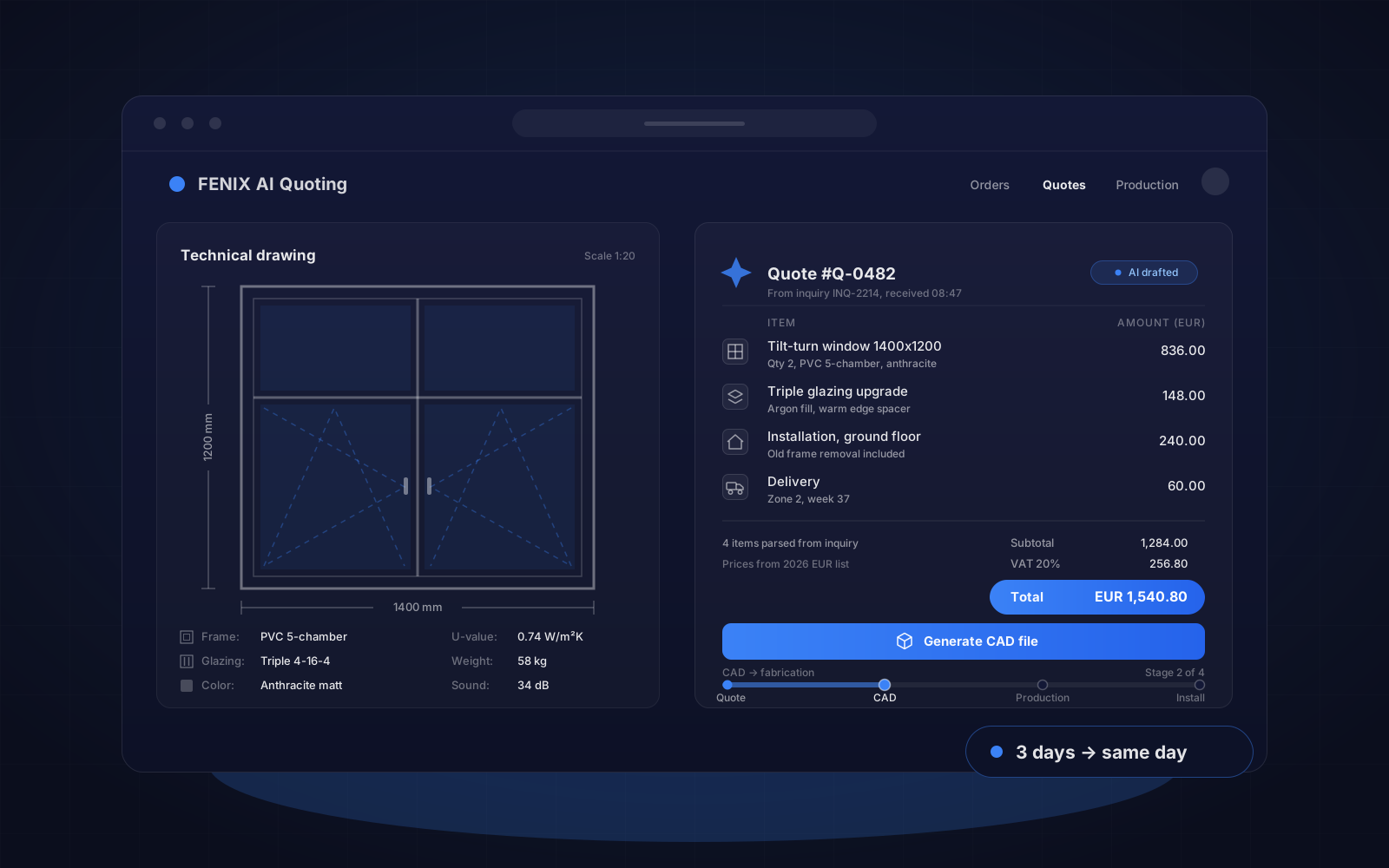
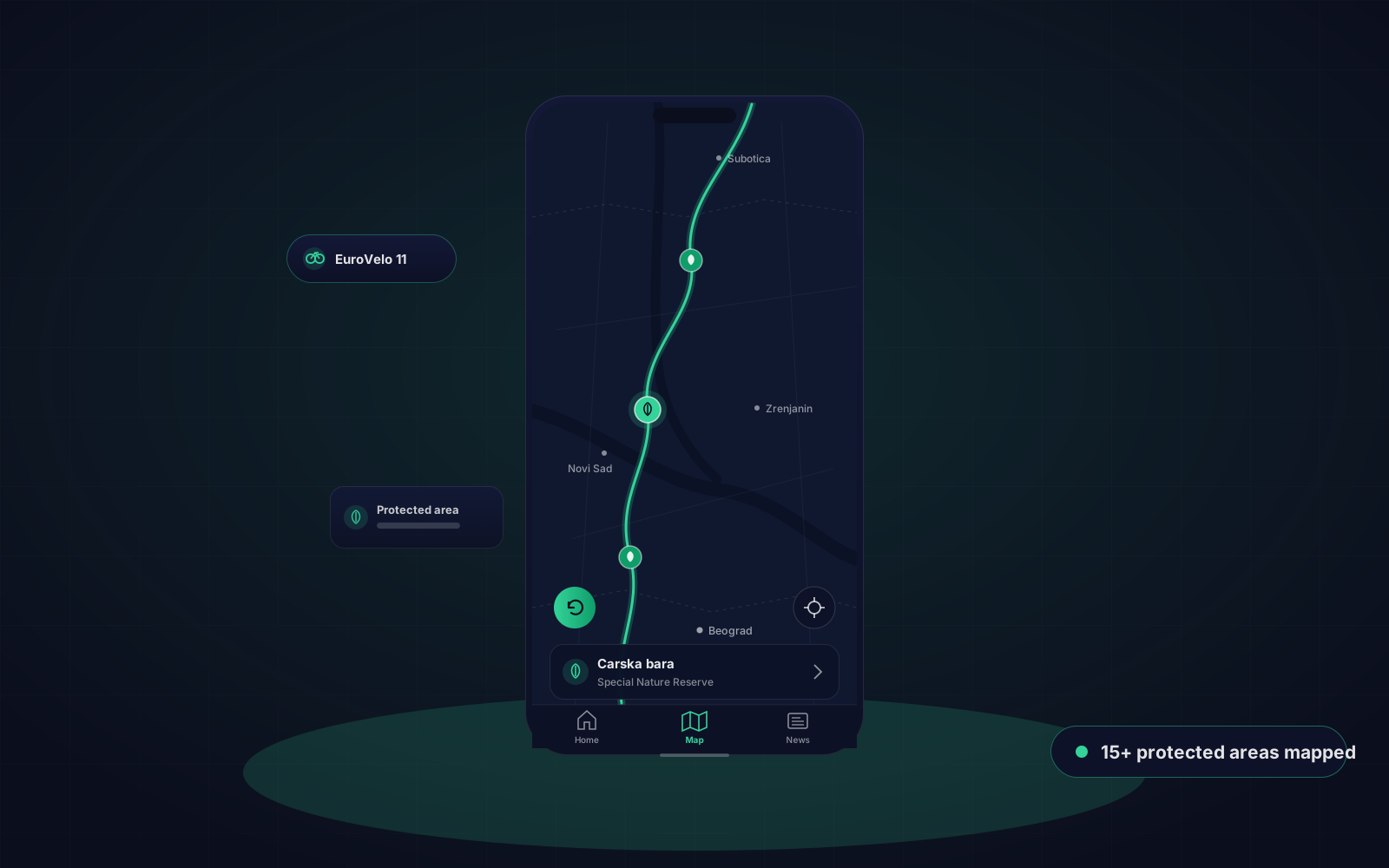
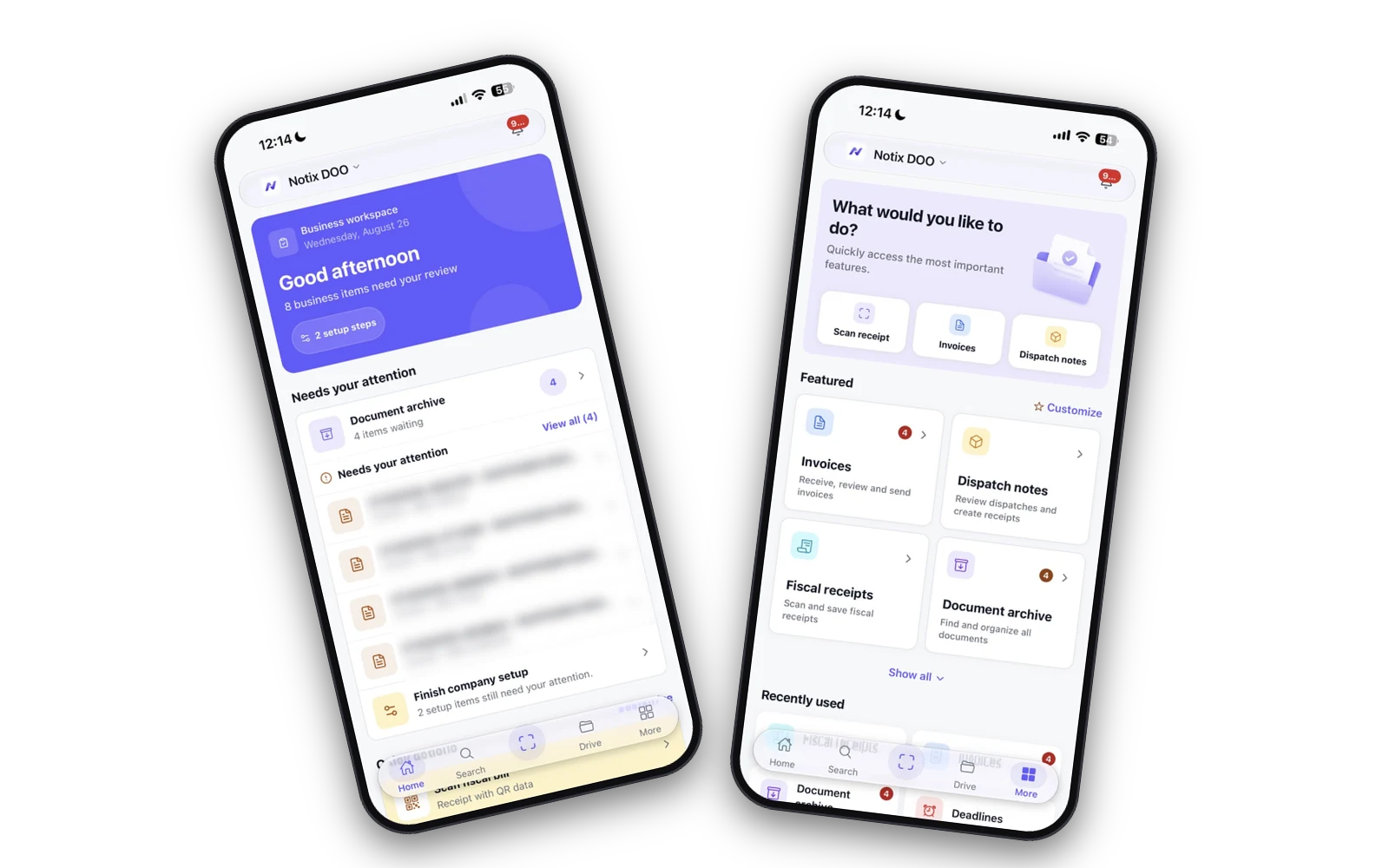
No TMS, no forwarder, no 3PL: none of these are logistics clients and we are not going to imply otherwise. This is the adjacent work the page rests on: a manufacturer whose quote to fabrication handoff we automated end to end, a Google Maps based route application for a government body, and our own document platform.
Related reading


FAQ
Common questions.
Let's talk
Bring us your hardest logistics workflow
Book a free consultation and we will work through the actual problem: the customs data that keeps rejecting, the visibility gap between your systems, or the fleet build you are deciding whether to make or buy. You leave with a scoped plan, an honest read on where an off-the-shelf platform would serve you better, and no obligation.
Book a Free Consultation